[Opinion] Drum machines and AI
In the 1980s, drum machines (think Roland TR-808 Rhythm Composer) were advertised as "cheaper than hiring a drummer". Studios openly discussed cost savings, rhythm sections were described as becoming obsolete and even musician unions were concerned about loss of session work with producers replacing rhythm with machines. Sounds familiar?
What happened? The machines changed what drummers do, who got hired and how rhythm is produced. Modern drummers function partly as live performers, partly as rhythmic technicians.
There is a very common pattern in history of:
1) New tech appears.
2) Industry says "This will replace humans."
3) Some jobs initially shrink.
4) The craft adapts.
5) New roles appear.
6) The tool becomes normal.
This pattern is also accelerated by effects such as Jevons Paradox, and what starts of as "replacement" often ends with "augmentation" once the practices have co-evolved.
For reasons of debt, a critical set of practices that are yet to emerge covers questions on how we maintain reasoning, understanding and the chain of comprehension in this new AI world. Another set of questions covers what we mean by software engineering, it certainly does not just mean building functionality by writing code.
These questions of practice are why I'm writing Rewilding Software Engineering with Tudor Girba. It's not finished yet, but it's part of a long journey for me from my early discussions on conversational programming a decade ago (what you would call vibe coding) to the debates of today.
Without these practices, we will end up with a mess that no human can understand or reason about i.e. we end up by default with replacement. This creates fragility within our systems and misses out the greater opportunity that augmentation brings.
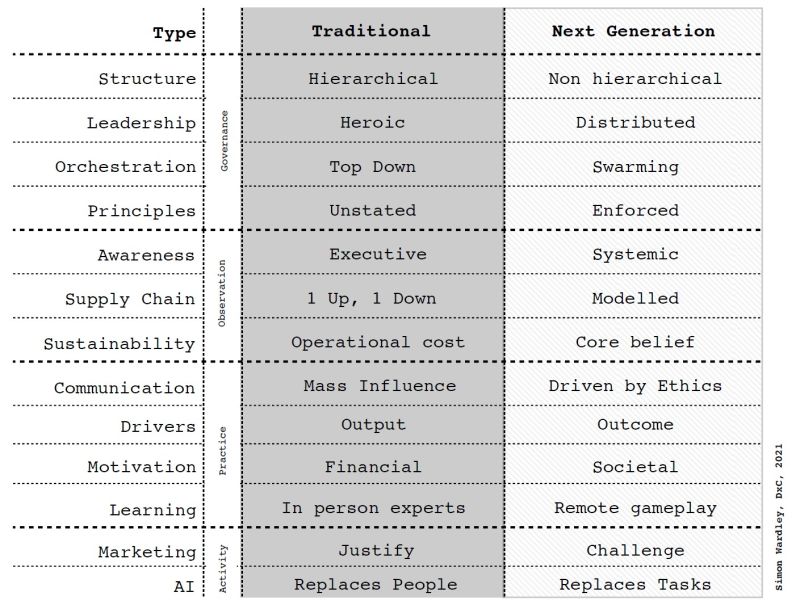
Yes, there are companies out there that think the future is replacement of people (rather than replacement of tasks). They also happen to be the same companies that believe in heroic leadership by the executive, they have little awareness of their own supply chains, their communications are driven by mass influence (not ethics), their drivers are focused on output not outcome and their motivations are financial not societal. This became clear to me from the population study of companies that I run in 2021 (see attached).
I do these studies every decade. Previously, the Next Generation characteristics won. I have no reason to believe the 2021 study will be any different. I have no reason to believe that practices won't co-evolve. I have every reason to believe that augmentation will win.
I also have every reason to believe that tool vendors and the financial interests of their "heroic" executives are behind all these narratives of AI will replace software engineers.
Originally published on LinkedIn.